EV Nepal: Electric Vehicles & Smart Home Design for NRNs
EV Nepal: Why Electric Vehicles Matter for Your Dream Home In 2026
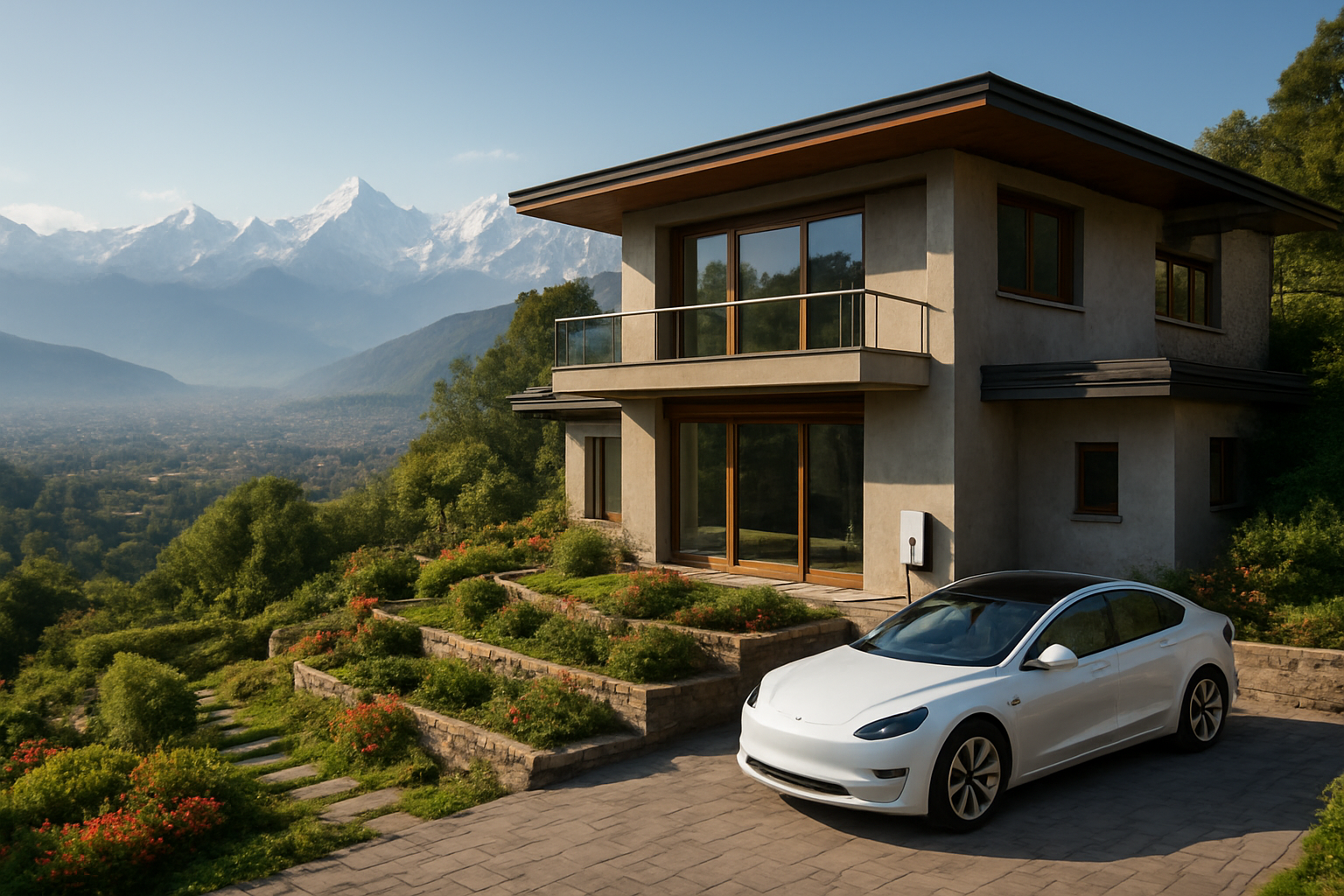
Imagine returning to Nepal after years abroad, building your dream home in the hills of Kathmandu, and plugging in your electric car right in your own garage. This isn't a futuristic fantasy—it's the new reality sweeping across Nepal. The nation is embracing electric vehicles (EVs) faster than ever, and for Non-Resident Nepalis (NRNs) planning to build or invest in a home, understanding the EV landscape is crucial. At GharNaksa, we’re not just designing houses; we’re creating future-proof homes that align with Nepal’s green revolution.
In this article, we’ll explore the electric vehicle boom in Nepal, government policies, charging infrastructure, and how you can integrate EV readiness into your custom home design. Whether you’re eyeing a terraced house in Budhanilkantha or a modern duplex in Lalitpur, here’s what you need to know about EV Nepal.
The EV Revolution in Nepal: More Than Just Cars
Nepal’s EV landscape has transformed dramatically. Once limited to a handful of imported models, the streets now feature everything from electric scooters to luxury SUVs. This shift is driven by two key factors: rising fuel costs and a strong push for energy independence, given Nepal’s abundant hydropower resources.
Electric two-wheelers have led the charge, with brands like NIU, Yadea, and locally assembled options becoming common. Four-wheelers are also gaining traction, with BYD, Tata, MG, and Hyundai offering electric models at competitive prices. Even public transport is electrifying: Safa tempos have been a staple in Kathmandu for decades, and now electric buses are plying major routes.
For NRNs, this means that when you return, you’ll have a wide array of EV choices that are practical for Nepal’s terrain and climate. Mountain roads and monsoon rains are no longer barriers; modern EVs offer ground clearance and battery ranges sufficient for daily commutes and weekend getaways to Nagarkot or Dhulikhel.
Government Policies Driving EV Adoption
Nepal’s government is aggressively promoting EVs through fiscal and regulatory measures. The 2023 budget slashed customs duties on electric vehicles, making them significantly cheaper than their petrol counterparts. Import taxes on EVs can be as low as 10–20%, compared to over 200% for internal combustion engine vehicles. This tax differential is a game-changer for affordability.
Additionally, the National Planning Commission’s long-term vision includes phasing out fossil fuel vehicles by 2031 in certain categories. Municipalities like Kathmandu are exploring low-emission zones, and there’s talk of requiring new buildings to include EV charging infrastructure. While building codes (NBC) don’t yet mandate EV readiness, forward-thinking homeowners are getting ahead of the curve. GharNaksa stays updated on these policy shifts so your home isn’t just compliant but ready for the future.
Charging Infrastructure Across Nepal: What NRNs Should Know
One common concern about EV Nepal is charging availability. The network is growing rapidly. Kathmandu, Pokhara, and major highway corridors now have public fast-charging stations operated by companies like Nepal Electricity Authority, private firms, and even petrol pumps diversifying into EV charging. Resorts and hotels along trekking routes are installing chargers to attract eco-conscious tourists.
However, for the most convenience, home charging is unbeatable. In Nepal, where load-shedding is a thing of the past, you can rely on your own power supply. GharNaksa designs homes with dedicated EV charging circuits, ensuring your car charges overnight while you sleep. We also advise on integrating solar panels to further reduce costs and carbon footprint—an appealing prospect for NRNs who value sustainability.
Why NRNs Should Consider EV-Ready Home Design
If you’re investing in a house in Nepal, adding EV infrastructure during construction is far cheaper than retrofitting later. Here’s why NRNs should prioritize this:
-
Future-Proof Investment: As EV adoption skyrockets, a home with a charging point will have higher resale value and rental appeal.
-
Convenience for Frequent Travelers: If you shuttle between Nepal and your overseas residence, having a personal charger eliminates range anxiety.
-
Sustainability & Prestige: Green living is a status symbol among Nepal’s elite. An EV-ready home reflects your global mindset.
-
Government Incentives: Upcoming regulations may offer tax rebates or faster permits for homes with sustainable features.
GharNaksa integrates these elements seamlessly into architectural plans, whether you’re building a traditional Newari-style home with modern amenities or a contemporary minimalist villa.
Key Features of an EV-Ready Home by GharNaksa
Our designs go beyond just a wall outlet. Here’s what we include:
Dedicated EV Circuit and Charging Station
We install a 32-amp circuit with a Type 2 or CCS connector, compatible with all mainstream EVs. The charging point is weatherproofed for Nepal’s monsoon season and placed in a covered garage or carport.
Solar Integration
Nepal’s sunshine hours are excellent for solar. We design rooftop solar arrays that can power both your home and your EV, reducing grid dependence. Excess energy can be fed back to the grid under net metering policies.
Smart Energy Management
Our smart home packages include energy monitors that optimize charging during off-peak hours, saving you money. You can control everything from your smartphone, even while you’re abroad.
Earthquake-Resistant Construction with Future Tech
All GharNaksa homes adhere to NBC 105 seismic standards. We ensure that electrical systems are safely embedded in reinforced structures, with conduits ready for EV upgrades as battery technology evolves.
Cost Considerations for Integrating EV Charging
The cost of adding EV readiness varies based on charger type, solar panel capacity, and home size. On average, a basic Level 2 home charger installation can range from NPR 50,000 to 150,000, but doing it during construction reduces labor costs significantly. Solar systems add to the upfront investment but pay for themselves over time through fuel savings. GharNaksa provides transparent estimates and helps you weigh the long-term benefits.
Future-Proofing Your Home with Smart Energy Solutions
Nepal is heading toward a decentralized energy grid. By designing your home to generate and store power, you’re insulating yourself from any future energy price fluctuations. Battery storage systems like home powerwalls can store excess solar energy for nighttime EV charging. GharNaksa can integrate these into your plan, ensuring your home is ready for the next decade of innovation.
FAQs About EV Nepal and Home Design
Here are answers to common questions from NRN clients:
Are electric vehicles practical for Nepal’s hilly terrain?
Yes! Modern EVs have instant torque and high ground clearance, making them excellent on steep, winding roads. Battery ranges of 300+ km cover most intercity travel. With a home charger, daily commutes are effortless.
What if I’m not buying an EV yet—should I still include a charger?
Absolutely. Pre-wiring for a charger costs minimal during construction. Even if you don’t use it immediately, it’s a valuable selling point and protects against future installation hassles.
Can I charge an EV using Nepal’s standard electricity supply?
Yes, most homes have 220V single-phase supply suitable for Level 1 charging. We recommend a dedicated circuit for faster Level 2 charging. Solar panels can offset the added load.
Does GharNaksa only build in the Kathmandu Valley?
We primarily serve Kathmandu, Lalitpur, and Bhaktapur, but we also undertake projects in Pokhara and other urban areas. Contact us to discuss your site.
Ready to Build Your EV-Ready Home? Contact GharNaksa
At GharNaksa, we blend traditional Nepali craftsmanship with cutting-edge technology. Whether you’re an NRN planning a permanent return or a seasonal retreat, we’ll design a home that fits your lifestyle and values—including seamless EV integration. From site selection to move-in, our team handles everything, so you can focus on the excitement of coming home.
Get in touch today to start your journey toward a sustainable, future-proof home in Nepal. Let’s electrify your dream together.
You might also like